

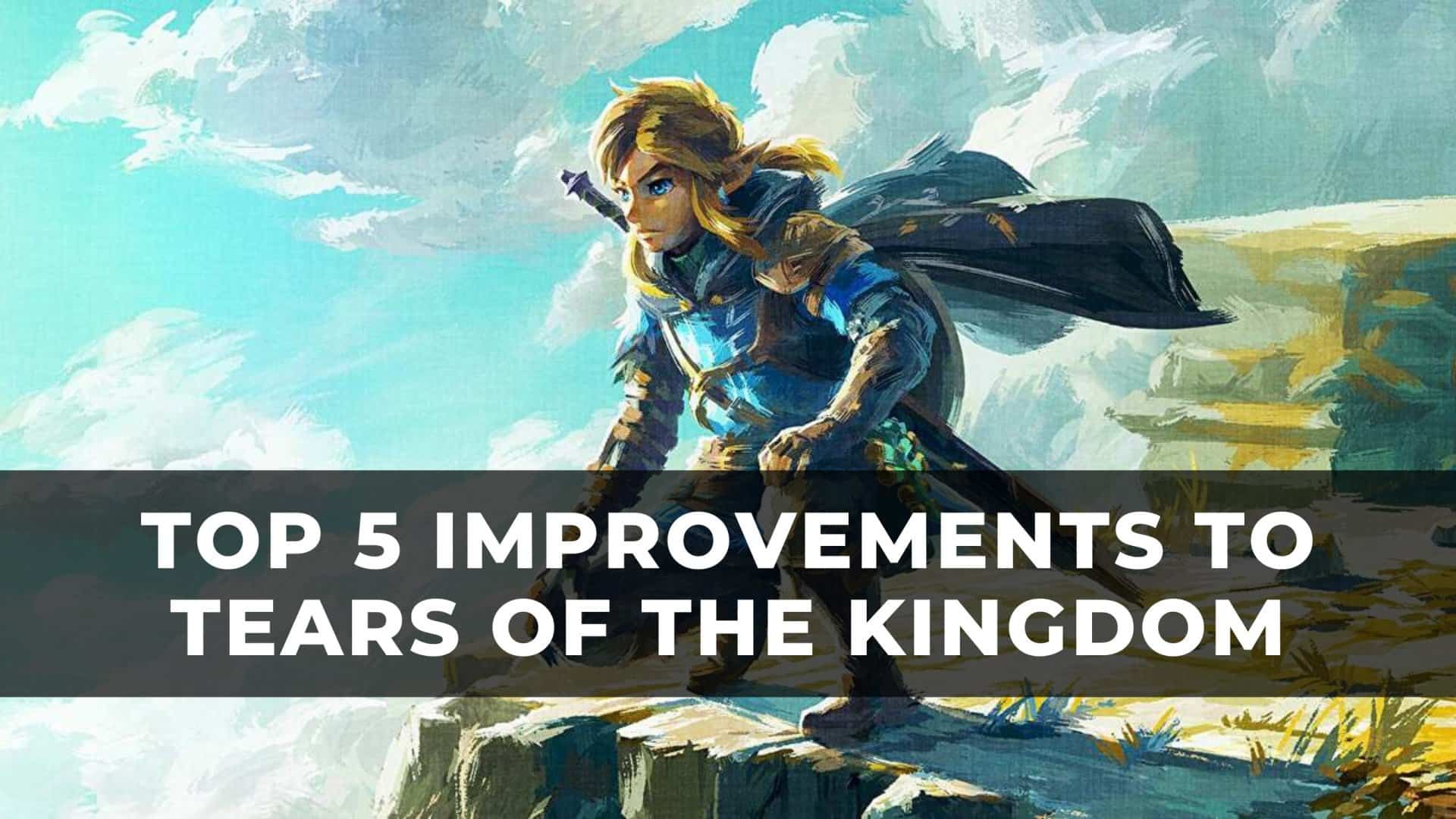
With Breath of the Wild, Nintendo reinvented the way the industry looks at open-world games. And with Tears of The Kingdom, Nintendo improved upon one of the best games ever made. Fans and critics agree. The glowing reviews and incredible sales numbers since launch have certainly made it a lock for Game of The Year.
Zelda producer Eji Auomuna recently confirmed the team was moving on to the next title in the franchise. Coupled with the direction of the franchise locked into its current form, a Tears of The Kingdom follow-up is highly likely. Despite its quality, Tears of The Kingdom is far from perfect. If the Zelda team has begun work on a 3rd open-world title (Breath of the Wild 3 / Tears of the Kingdom 2?) there are a few areas in this formula that can be improved.
Table of Contents
hide
Performance
This is the easiest fault of Tears of the Kingdom to fix. The sheer scope and scale of Tears of the Kingdom between a revamped Hyrule, The Depths, and the Sky Islands pushed the Switch to its limits. While Breath of the Wild had spots of slowdown, especially in the Korok Forest, Tears of the Kingdom suffers from near-consistent issues in this department. Especially on older versions of Nintendo’s hybrid console.
Regardless of what the player is doing and where Tears of the Kingdom suffers from short stutters to elongated bouts of dropped frames that can hamper the experience. It’s clear Tears of the Kingdom’s ambition outweighed the Switch’s capabilities. This is something that can be easily addressed in a sequel or new entry.

Tears of the Kingdom is a truly massive game
With developers allegedly getting hands-on experience with Nintendo’s next console at Gamescom this year, it’s rumored to be as powerful as the Xbox One and PS4. There were even reports of the tech demo being a “souped up” showcase of Breath of the Wild. Because of this, it’s easy to see how this hardware would be able to handle the likes of Tears of the Kingdom.
If the next Zelda title iterates on Tears of the Kingdom as it did with Breath of the Wild, the world could be much grander and be expanded beyond Hyrule, its Sky, and Depths. While it might seem like a nitpick, frame drops and stuttering can affect hectic battles and tranquil trips through Hyrule. With the power of new hardware, Tears of the Kingdom’s frame rate and performance issues would be something Nintendo could easily iron out.
Temples
One of the biggest omissions from Breath of the Wild, when it changed up the Zelda formula, was the absence of traditional dungeons. While the Divine Beasts and Shrines whetted the appetites of puzzle fanatics, fans and reviewers agreed that if Breath of the Wild were to get a sequel, Temples should make their return. This was the case upon the release of Tears of the Kingdom. Sort of.
Tears of the Kingdom’s temples aren’t traditional in the Zelda sense. They’re actually an improvement on the Divine Beasts as they’re more integrated into Hyrule than the latter. That integration is also their biggest weakness. Similar to the narrative (which we’ll get to in the next section), everything in Tears of the Kingdom has to be balanced due to the sheer freedom granted to the player.

Tears of The Kingdom’s Fire Temple
This, in turn, means that major challenges such as Temples can’t scale their difficulty because every player might approach them at different times in their journey. This leads to each Temple being very samey. They each employ the “open the 5 locks” gimmick (or 4 locks in the case of the Lightening Temple) to reach the boss and get the Secret Stone. While each Temple stands apart from the last aesthetically, mechanically they’re very similar. Even down to using partner abilities to open each lock (something else we’ll get to as well).
The freedom granted to the player is sustained through the Temple’s seamless integration into the open world which is fantastic. The downside (or upside depending on one’s viewpoint) is that nothing is off-limits in terms of traversal. Players can easily “cheese” some Temples, especially the Fire Temple, bypassing entire puzzle sections by climbing, gliding, and ascending one’s way around.

Tears of the Kingdom’s Water Temple
While this freedom is refreshing, it can also feel like breaking the game but in a bad way. Dungeons from past titles were carefully curated experiences, leading the player through a gauntlet of interesting puzzles. It was also fun to find keys that open doorways to new areas or take on mini-bosses that would reward players items to continue progressing through the dungeon and the rest of the game at large.
Tears of the Kingdom’s structure would clash with this design which is why the Temples exist in the way that they do. There was an attempt to play the middle ground but the sameness that radiates through each Temple doesn’t quite scratch that Zelda temple itch. A shift in focus back to traditional temple design would feel at odds with the rest of the game meaning Nintendo is in a tough spot here.

One of Tears of the Kingdom’s Puzzles
The Spirit Temple might be the ideal blueprint for a Tears of the Kingdom follow-up. While the Spirit Temple proper is no more than a few rooms and a boss fight, the lengthy quest to obtain Mineru’s Secret Stone is one of the game’s best. It’s filled with traversal around the open world, taking the player from the Skys to Hyrule and down to the Depths. It utilizes all of the player’s abilities in fun yet bite-sized puzzles. It’s far more story-driven than any other of the previous Temples involving many recurring characters up to that point. While it’s not technically a Temple by the game’s definition, it’s the ideal way to create one in Zelda’s massive open world in ways the other Temples just can’t.

Tears of the Kingdom’s Shrines
While the Temples of Tears of the Kingdom are an immersive step up from the Divine Beasts of Breath of the Wild, they don’t get close to sniffing some of the best options from previous games. It’d be a tall task to somehow marry the best parts of both formulas to make something that’s both new and familiar while also retaining the identity of this new direction. But if any company is up to the challenge, it’s Nintendo’s Zelda team.
Storytelling (Spoilers)
Story hasn’t always been Zelda’s strong suit. It’s mostly the same “legend” with Link, Zelda, and some incarnations of evil in a battle to save the world. While each game has its nuances that make them unique, the plots are usually the same. And that’s okay because it works. This can be said for Tears of the Kingdom as much as any game prior to it. The story itself isn’t really the issue but more so the way that story is told.
Breath of the Wild took a Halo ODST approach, with two different parts of the plot happening concurrently. The player can reveal memories of Link by visiting locations of pictures pre-loaded in the Shieka Slate. This fills in the gaps as to what happened 100 years prior. Alternatively, while the player progresses through the game, they play out the traditional help Zelda save the world from Ganon plot.

Opening Moments of Tears of the Kingdom
This storytelling device functioned well because it worked in conjunction with the emphasis on exploration. Explore every nook and cranny and among discoveries are snippets of the past that both the player and Link can discover for the first time. They’re also optional, adding context to past events that aren’t vital to understanding the main plot. This is not the case with Tears of the Kingdom.
The Dragon Tear Geoglyphs, an initiation on the same type of exploration from the Sky, serve the same purpose as Breath of the Wild’s memories. And while these flashbacks fill in the gaps of what happened to Zelda after The Upheaval, they’re almost crucial in understanding the larger plot at hand. They’re also spoilers for the current narrative unfolding in the present.

Link and his Zonai Arm
The main quest starts off by tasking the player to find out what happened to Zelda, which is quickly revealed in one of the first Geoglyphs the players can find. Zelda was transported to the past to the birth of Hyrule Kingdom. She’s tasked with using her powers to reconstruct the Master Sword for Link to use in the present to defeat the now-resurrected Ganondorf.
Nothing too complicated until the main quest kicks into high gear and players start investigating environmental anomalies in each of the four major regions. Each of these questlines involves entering one of the aforementioned Temples and defeating the boss to halt whatever weather-related issues are occurring. During these quests, Zelda is featured prominently either being in danger or being the cause of whatever is plaguing the region.

Zelda Restoring The Master Sword
This would be a decent mystery if the player already wasn’t aware of Zelda poofing to the past. While it’s technically possible to be ignorant of this plot point it’s highly improbable given how the opening hours play out. The player would have to ignore the giant glowing images seen from the highest points in the Sky in order for said mystery to work. The problem is exacerbated by the fact that, just like the temples, each region’s quest line plays out similarly to the next. Each region’s quest goes as follows:
Travel to a region and find the weather is out of whack. Find the leader of that region’s respective race be it Gerudo, Rito, Zora, or Goron. Investigate the anomalous weather conditions that involve something to do with Zelda and the newly arrived Sky Islands and/or Depths locations. Once the temple is revealed and completed, the player receives the same expositional dump about that race’s ancestor trying to stop the Demon King from taking over Hyrule. Then the Sage of Time (Zelda) tasks their lineage to help Link in the present.

Ganondorf in Tears of the Kingdom
The game isn’t able to dynamically relay bits and pieces of the backstory from the different races’ perspectives based on which temple is completed by the player. Or in which order, they’re all structured the same. There’s little variation in the way this story is told which gets very repetitive, very quickly. This is a bummer solely because each region’s issues start off interesting but by the second temple, the player can predict how it’s going play out beat by beat. After all of these quests, the game has the gall to act like it’s some big reveal halfway through the game that the Zelda the player has been encountering up to that point was (spoiler alert) not actually Zelda!
Tears of the Kingdom has this strange obsession with the whereabouts of the title’s namesake but immediately reveals the answer to this mystery but never takes it into account. Another example would be the Potential Princess Sightings questline. Link is tasked with working for a newspaper researching, well, potential sightings of Princess Zelda. This would work if the player is unaware of where Zelda is. But if they are, it comes across as super awkward. Doubly so considering Link himself knows yet won’t tell anyone because…?
The traditional saving the world from Ganon plot serves its purpose but the way it plays out is disjointed and awkward. In both Breath of the Wild and Tears of the Kingdom, it’s clear Nintendo favored gameplay over story. Admittedly, it is tricky to balance a truly massive open world and freedom unlike any Zelda title to date with a gripping narrative with real stakes. But it is possible. The best course of action would be to do away with this style of storytelling as a third title with the same amnesia-ridden Link would be tiring.
Sage Abilities
Breath of the Wild introduced the idea of Champion Abilities, actively passive abilities that helped the player in one manner or another. Whether it be an extra protective shield or a resurrection after a tumble off of a mountain, these Champion Abilities were a nice addition outside of Link’s base moveset. Because Tears of the Kingdom is iterative of Breath of the Wild, it, of course, had to feature something similar.
Enter the Sage Abilities. They are objectively worse than their previous incarnations in almost every way. On a positive note, it is nice to see them being actively used for puzzle-solving or traversal in Temples and other parts of the open world. But otherwise, the Champion Abilities are far more useful and integral to their respective adventure. Comparing each, it’s easy to see why.

Tears of the Kingdom’s Sages
Tulin’s ability is essentially Revali’s Gale but horizontal instead of vertical which makes sense considering the addition of the Ascend ability. His ability might be the most useful, prolonging paraglider trips across the vast Sky. Yunobo’s ability might be the most unique but also the most situational, being able to fire his curled-up Goron form. It’s neat to break rocks and deposits without having to deliberately damage a weapon. Besides that, it’s a bit underwhelming.
Riju’s could go either way. Urbosa’s Fury was situational at best, calling down a rain of lightning while players charged up an attack. Riju can do the same but with more of a direct attack this time around. They both have a similar issue where it takes a bit too long for the attack to get at an effective range. Riju’s ability does get bonus points for being the most effective at taking out Gibdos but that might be a case of the latter being designed to give the former more relevancy.

Vow of Tulin, Sage of Wind
Finally, Sidon’s ability is like a weaker version of Daruk’s Protection, encasing the player in a temporary water shield. The shield doesn’t last forever and can be used to power up a slash or attack with a water projectile. Overall, not very useful against anything but fire-related enemies. That’s especially true when compared to Mipha’s Grace which would be a literal life saver.
What truly makes the Sage Abilities a detriment is how awkward they are too active. The Champion Abilities initiate almost effortlessly as compared to the Sage Abilities. Players have to fumble about, chasing around specters of their respective Sages, mashing A to activate an ability. If all four Sages are activated at once, it’s like playing a game of tag trying to activate the right one, especially in the heat of combat.

Tulin’s Sage Spirit
It’s disappointing because the Sages have potential. Unfortunately, they feel like they were added more out of obligation rather than improve on Breath of the Wild’s base like the rest of Tears of the Kingdom does. The easiest way to improve on them would be to either revert them back to the more passive version of these abilities from Breath of the Wild or make them more of an active part of the player’s repertoire. Majora’s Mask might be the best blueprint for this. Nintendo could turn each Sage Ability into a transformation of sorts.
Not only would this make these abilities much easier to use but they can be tailored to the open-world exploration-focused gameplay these new Zelda titles focus on. These forms are pretty self-explanatory. Turning into a Goron and rolling through open fields. Cruising through rivers or lakes as a Zora. Soaring through the skies as a Rito. Zapping enemies as a Gerudo. These transformations could be built upon as players progress, offering more utility the stronger Link gets. Regardless of how Nintendo does it, the Sage Abilities need some serious overhauling in the next Zelda title if they plan on keeping them at all.
Combat
Combat in Breath of the Wild and Tears of the Kingdom is not shallow by any means. There’s no shortage of options for players to use in combat from the ordinary to the extraordinary. But, for whatever reason, modern Zelda combat feels like it’s missing….something. Standard combat is about as basic as it gets with Flurry Rush being copied and pasted from much better hack-and-slash titles like Bayonetta.
Various weapon types mix this formula up enough but weapon degradation throws a wrench into the machine. Credit where credit is due, the Fuse Ability keeps weapon combos fresh with various buffs and effects. Still, it doesn’t help the combat feel any less generic. And with more of an emphasis on combat in Tears of the Kingdom, it’s felt even more so than its predecessor.

Link Fighting A Zonai Construct
The world’s design and the enemies who inhabit had a clear impact as to why the combat is the way it is. Previous more linear Zelda adventures had much more varied combat against enemies with unique tactics and AI. Titles like The Wind Waker and Skyward Sword give Link a myriad of moves to pull off to not only make combat more engaging but also add to this sense of growth as a swordsman.
A follow-up to Tears of the Kingdom should follow something like the Hero’s Shade in Twilight Princess. Link was able to learn new moves to utilize in combat like the Helm Splitter or a Finishing Blow. These not only made some enemies easier to dispatch but also gave combat the flare it was missing from titles like Ocarina of Time.

Link Battling a Flux Construct
In Tears of the Kingdom especially, something akin to this would directly conflict with the narrative. With Link already being anointed as the greatest swordsman in the kingdom and hero of Hyrule, it makes little sense for him to train or gain new moves in a narrative sense. To combat this, a new Zelda title might want to go the Metroid, stripping Link of all his abilities and moves to start fresh.
The idea of the Hero’s Shade would certainly push exploration. Nintendo could employ some sort of spirit or traveling sensi in certain areas of the world map that players need to find to expand their battle techniques. They could even piggyback off the Misko’s Treasure route, with some legendary teacher leaving clues around Hyrule to entice swordsmen throughout the world.

Hero’s Shade From Twilight Princess
Regardless of how it’s implemented within the overall game world, a new Zelda game needs to address the mundanity of its current combat model. Even something as simple as a traditional dodge roll ala From Software titles would have a cascading effect, allowing enemies to have different attack patterns that accommodate for it. But as it stands now, Zelda’s combat is serviceable at best but could certainly be improved in another attempt in its current form.
Best Guides for The Legend of Zelda: Tears of the Kingdom


