

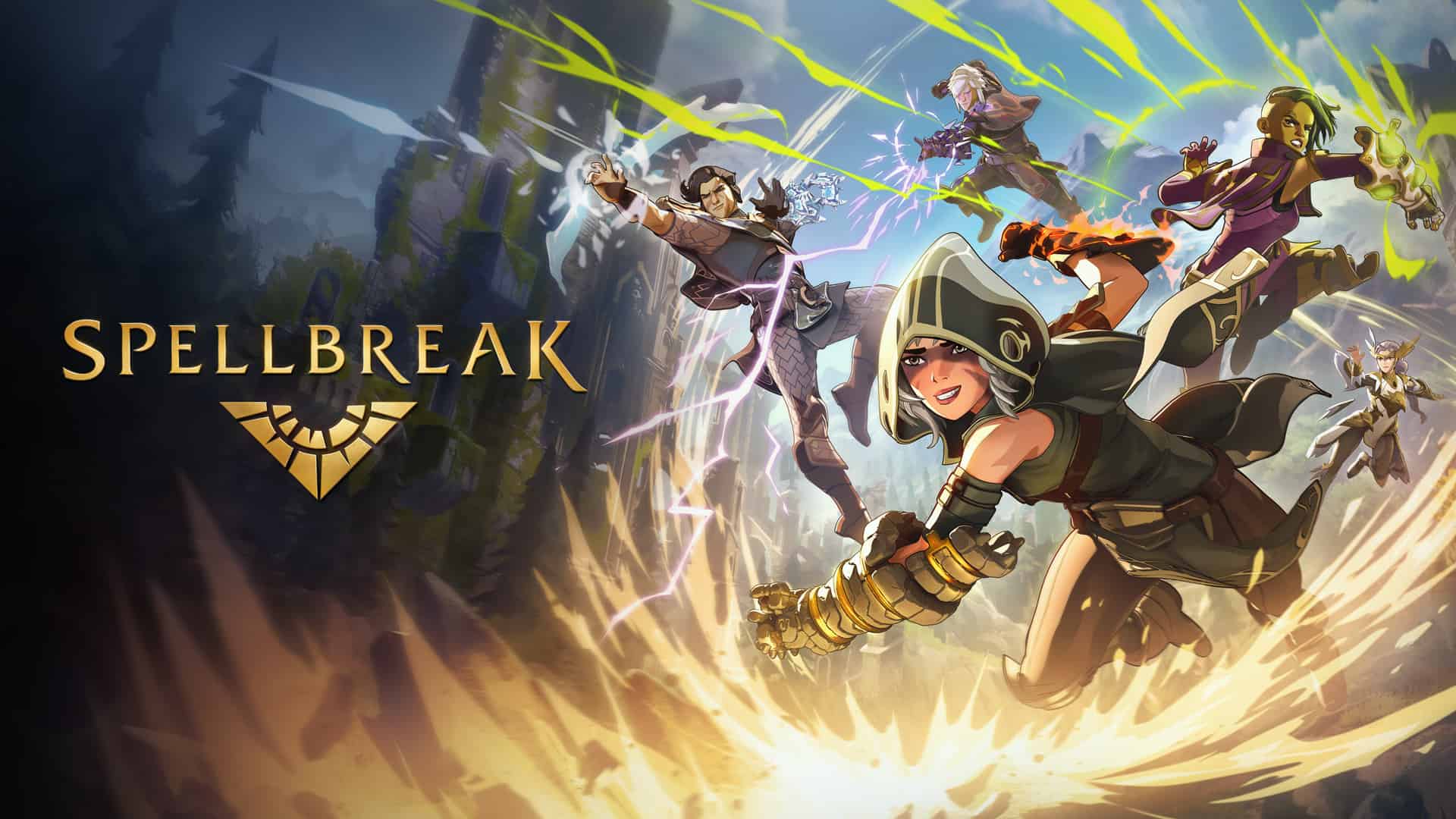
Unlike titles of its kind, Spellbreak take on features from classic MOBA (multiplayer online battle arena) games such as Smite and, of course, League of Legends, whilst seemingly maintaining a true Battle Royale experience. It offers a fantasy take on a genre some may say is fatiguing, clearly appealing to those who are more entertained by MMORPG’s (massively multiplayer online role-playing games) and genres of that nature, rather than the typical FPS (first person shooter) player. For those looking to take a break from the more intense, tactical Battle Royale’s of Call of Duty: Warzone and Player Unknown’s Battlegrounds, Spellbreak offers a more relaxed tone, yet still provides a competitive manner and level of complexity to which both serious and casual players can get to grips with.
Play for free now in squads of three, duos or even solo on PS4, Xbox, Switch and PC.

Story – MOBA Influence
In Spellbreak, 42 players drop into the map and fight for survival, with classic Battle Royale rules: the last team or player standing wins. Players go face to face, battling it out with elemental gauntlets that have a variety of attack moves and play-styles. Keeping within the MOBA comparison, as well as containing “line” and “AOE” (area of effect) attacks, Spellbreak features a mana bar which essentially controls your movement and the amount of spells you cast, a reminiscent mechanic of MOBA games. Players will have to pick up the Amulet item during a game in order to increase their mana and therefore sustain their attacks and movement. The mana bar is an interesting addition to the Battle Royale genre, providing a skill gap between players who are paying attention to its depletion and to those who are aimlessly spamming abilities and movement.
Loot
Spellbreak does a good job of incentivising players to loot, with essential items such as boots allowing players to run faster, and runes, which are similar to the hacks in Ubisoft Montreal’s Battle Royale, Hyperscape. Spellbreak is fast and vertical, with every player having the ability to hold their jump and fly up until their mana bar is out, as well as perform various mobility-based runes such as flight and teleportation. However, the most important items in Spellbreak are the elemental gauntlets, which fundamentally act as your loadout. Players are able to possess two gauntlets, however they may only pick one to start with before entering a game, the other must be found when looting. This is where I believe Spellbreak really thrives, as the various playstyles offered by the way in which each elemental gauntlet interacts with one another is truly where I found the game to be both rewarding and comprehensive.

Spellbreak’s looting
Gameplay – Elemental Fun
The cartoony art style and punchy colours work well at distinguishing each elemental class, one of which you will pick before you search for a game. Classes to choose from include: Frostborn, Stoneshaper, Tempest, Conduit, Pyromancer and Toxicologist, all of which have their respective abilities and bonuses. I won’t give all of these classes and their abilities away, as I do think learning what classes offer each player is a vital component of its unique gameplay. Having said that, I will touch on the combo of classes I am currently running to convey the variety of options Spellbreak provides in combat. The two classes I personally enjoy and think combine well together is Frostborn and Tempest. Frostborn is regarded as the “sniper” loadout of the game, while Tempest is the opposite, being considered the “SMG” class. The combination of these gauntlets allows one to get their damage in at range and then rush in with fast fire to finish the opponent.
One vital element of this combination, however, is the added mobility the Frostborn class gives the player if chosen as the primary gauntlet. In doing so, a shot arrow will subsequently leave an ice trail on the floor below it, which the possessor and their team can use to quickly skate across terrain in true Frozone fashion in order to finish a kill, evade the storm, or even escape from enemies. It’s these added features of each individual gauntlet that provides depth and comprehension to the gameplay, not to mention each elemental class also having a special attack. Discovering creative combinations of attacks between the differing gauntlets and finally pulling them off in game, whether combining your own gauntlets, that of a teammate’s, or even an enemy’s, is exactly why Spellbreak is refreshing, original and rewarding, especially as a Battle Royale.

Spellbreak’s elemental classes
Graphics & Audio – Nothing Magical Here
Spellbreak features a smooth, cartoony art style which further provides that sense of fantasy. The colours and design work well at portraying an elemental based game, even reminding me of popular animation Avatar: The Last Airbender, especially when I’m bombarded by a tornado. The main criticism I have of Spellbreak however is the lack of significant POI’s (point of interest) and overall dullness of the map. Although the gameplay and animation are bright and bold, the map design does seem to lack fondness and individuality around the differing locations. In fairness, there is variation in the terrain, with a dessert biome, grass lands and a foggy swamp; however, I do feel as if the buildings and places of loot could be much more extravagant and daring, rather than simple ruins or small castles and forts.
As for the audio, I do also feel as though a better distinction could have been made between opponents’ footsteps and that of your own teammates. However, apart from that I am able to distinguish certain elemental gauntlets from one another and identify faraway battles through the audio, which to me performs fairly well.

A dull map to fly into
Spellbreak was reviewed on PS4.


